
How one housing study became a roadmap for Dalton’s future
Anna Adamson
Executive Director, Flooring Capital Development Corporation
Executive Director, Believe Greater Dalton
Every weekday morning, thousands of people drive into Dalton to teach our children, care for our families, manufacture world-class products, and keep our local economy moving.
For years, many of them drove right back out at the end of the day.
That simple reality shaped Dalton more than we realized.
When the people investing in their careers here couldn’t also invest their lives here, the effects rippled throughout the community. Schools lost potential mentors and coaches. Hospitals recruited talented professionals who couldn’t find the right place to live. Employers struggled to retain workers while neighboring communities became home to many of the very people powering Dalton’s economy.
Housing wasn’t just a real estate issue. It had become one of Dalton’s biggest workforce, economic development, and quality-of-life challenges.
Take Sarah, a public school teacher investing in Dalton’s students every day who, until recently, couldn’t find a home that fit her needs. Or Mark, a nurse working long shifts at Hamilton Medical Center who wanted to live close to work but found most of his options in neighboring counties.
These stories of people seeking housing in Greater Dalton weren’t unique. They represented a broader challenge facing many growing communities: when the people who serve your community can’t find the opportunity to live there, the entire community feels the impact.
Dalton chose not to ignore that reality but instead to understand it through research and data.
Understanding the Problem
In 2018, Believe Greater Dalton commissioned its first comprehensive Housing Study to answer a simple but important question:
What was happening with housing, and why?
The findings were eye-opening.
Following the 2008 recession, many neighboring communities resumed residential construction, but Dalton’s housing market did not. For nearly two decades, new housing lagged behind demand.
Teachers, nurses, young professionals, retirees, and first-time homebuyers increasingly struggled to find housing that matched their needs. Unfortunately, many of these homebuyers found their housing needs in a different community than where they were building their professional lives.
Furthermore, the housing study revealed something even more important: Housing wasn’t simply about homes but was revealing gaps in community infrastructure.
Without a healthy housing ecosystem, workforce retainment becomes harder. Local businesses, like restaurants and retail spaces, struggle to grow without a population who buys during the weekdays and weekends. Young families look elsewhere. Communities lose opportunities long before they realize what’s happening.
Perhaps the Housing Study’s greatest contribution wasn’t identifying the problem but giving Dalton a common understanding of it.
With the data in the housing study, the puzzle pieces started to connect. Developers gained interest, public leaders gained direction, and philanthropic partners gained clarity.
For the first time in a long time, everyone was working from the same roadmap.
Turning Data into Action
Part of Believe’s work is presenting findings and potential solutions to vested stakeholders in the community. At one such stakeholder meeting, someone asked a straightforward question:
“So…what are we going to do about workforce housing?”
That conversation became a turning point.
Using the 2018 Housing Study as a guide, the City of Dalton, Joint Development Authority, Believe Greater Dalton, developers, employers, philanthropic organizations, and community partners began working toward solutions together.
The resulting collaboration extended beyond one housing initiative, turning into an entire housing strategy.
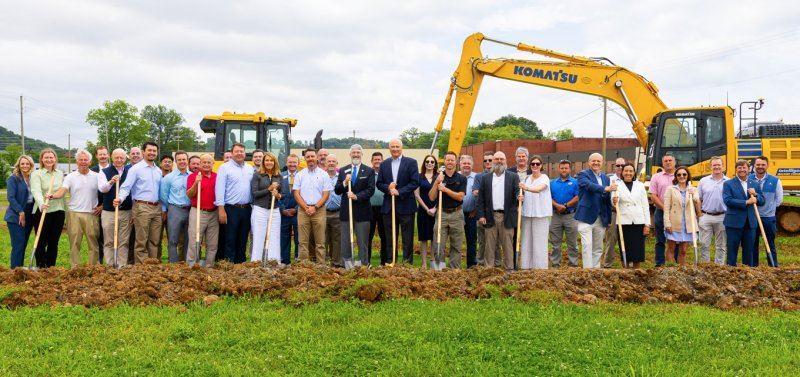
A project on South Hamilton Street, now named Hamilton Village, demonstrated what collaboration could accomplish through coordinated planning, updated zoning, philanthropic investment, and state infrastructure funding. This workforce housing neighborhood will soon offer 40 units that are quality, affordable housing near employment centers, combining forces with a private land donation, a state housing grant, and local zoning ordinances to create innovative housing that meets current gaps.
Other projects included Orchard Place and additional condominium developments, which are now at capacity or nearing it, proving market demand in our community. Patterson Farms, a planning community with a variety of home types on the North end of Greater Dalton, confirmed confidence in the local market for investors and developers. .
From 2023 to 2026, our community welcomed 3 multi-family developments to the market. Dalton by Alta introduced new market-rate apartments within walking distance of downtown. The Lofts at Hamilton expanded housing options near the medical district. The Township at Hammond Creek offered much needed options along the growing Dalton Bypass corridor.
Each project addressed a different need, but together, these housing opportunities began restoring movement throughout Dalton’s housing market.
Building Capacity
One of the Housing Study’s most important recommendations wasn’t simply to build more homes. It was to establish an organization to lead the coordination of housing efforts, align public and private partners, and advance the strategic initiatives needed to expand housing opportunities across Greater Dalton. That recommendation became the Flooring Capital Development Corporation (FCDC).
After securing funding for its first Executive Director in late 2023, FCDC shifted Dalton from planning to implementation. Today, three years into the work, FCDC counts several completed projects as success that intentional work in housing yields visible ROI.
FCDC recently completed and sold its first pilot housing project, testing innovative panelized construction alongside traditional building methods to evaluate construction timelines, efficiency, durability, and long-term affordability.
The project confirmed that no single construction method solves housing affordability.
Instead, innovation and market-specific demand for your community is paramount to get the housing equation aligned.
Those lessons have informed next steps, which seek to rebalance the housing ecosystem along the entire spectrum of housing.
At the same time, Dalton continues building the tools needed for long-term success.
The community has reactivated its Land Bank Authority, allowing strategic properties to be assembled for redevelopment. The main goal is to transform blighted spaces back into productive use to stabilize neighborhoods and support local growth.
Civic leaders also adopted a new Unified Planned Unit Development (UPUD) zoning district, giving developers greater flexibility to respond to challenging sites while encouraging higher-quality neighborhood design maintain a highly flexible, high quality, walkable, safe environment.
These projects continue to signify thoughtful, innovative, and research-backed solutions to address Dalton’s long-term capacity to address housing for decades to come.
Completing the Housing Spectrum
The Housing Question is not answered with one single project. A healthy community has a healthy housing ecosystem.
Market-rate apartments, Workforce housing, Income-restricted housing, Single-family neighborhoods, Townhomes, Missing-middle housing, and higher-income housing.
Each serves a different purpose and provides a solution for people across the socio-economic spectrum as well as moving through various life phases.
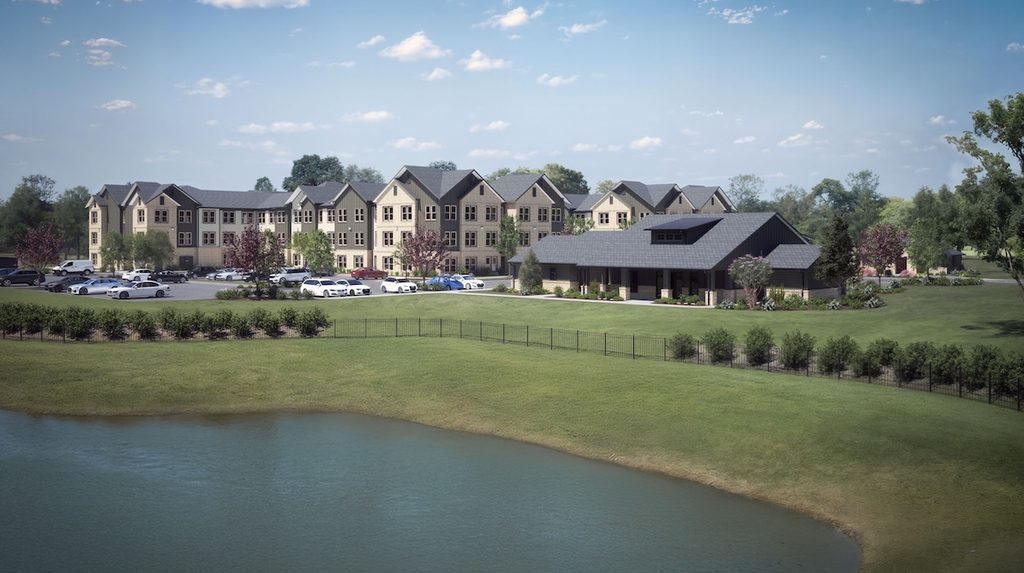
Believe Greater Dalton, in partnership with FCDC, is excited about these upcoming housing opportunities in our community, projects that would now have existed without collaborative work centered around research-backed data.
- Walton Fields is now under construction, in partnership with Walton Properties and Well Housed Dalton. These units bring much-needed income-restricted housing to Dalton while creating movement throughout the existing housing market. Families currently in Well Housed Dalton’s lowest income restricted apartments will have the opportunity to move into newer units that are still paycheck compatible and based on their demonstrated income.
- Hamilton Village continues advancing, demonstrating what can happen when employers, nonprofits, local government, developers, and philanthropy align around workforce housing.
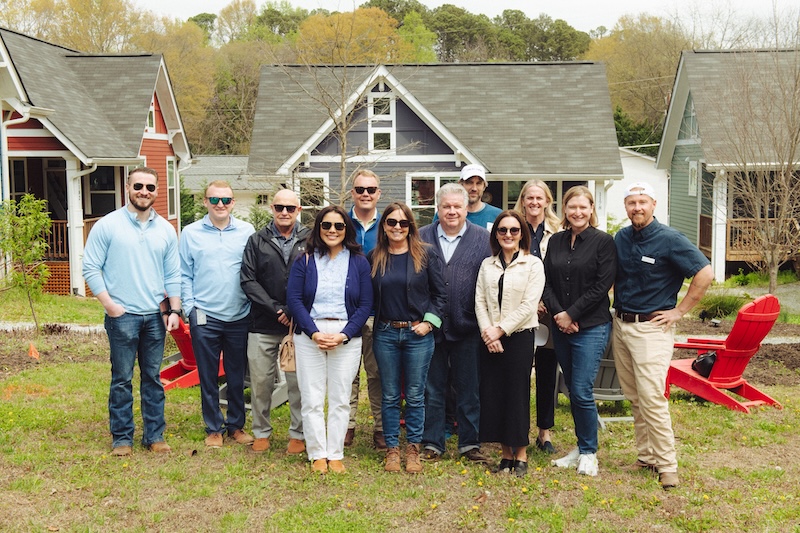
- Cottage Courts, in partnership with the Microlife Institute, is now in the final stages of design. Inspired by traditional neighborhood patterns, Cottage Courts explore how smaller homes organized around shared green space can increase affordability while creating stronger neighborhood connections.
Our goal is to create enough choice and movement within the housing ecosystem so that people can relocate or remain in Dalton through every stage of life.
When housing works, economic development becomes community development.
Believe’s Role
Believe Greater Dalton provides the research, resources, partners, and data that promote amenable conditions for housing to happen. We fund research, convene partners, align strategy, secure grants, and support organizations like FCDC. Our work connects housing to workforce, education, placemaking, downtown revitalization, and quality of life.
Housing succeeds because communities choose to work together, and Dalton has clearly made that choice. Public, private, nonprofit, and philanthropic partners are working together in ways that simply weren’t happening a decade ago.
Most importantly, Dalton has embraced a new way of thinking: housing isn’t simply about buildings but also creating the conditions for people to build a life here.
When a teacher becomes a neighbor; a nurse can coach Little League after work instead of driving thirty miles home; a young family can buy its first home; a retiree can downsize without leaving lifelong friends.
That’s when housing becomes community development and economic development becomes quality of life.
Our work invites people to put down roots, become part of the community they already help shape every day, and leave Dalton stronger than they found it.
Housing shapes our future. Our work everyday centers around the belief that Dalton is a market worth investing in, not just for businesses, but for people.


